(307) 682-3100
(605) 206-2077
Pain in the mouth is easy to dismiss until it starts affecting how you eat, sleep, or get through the day. A tooth infection can begin quietly, then show up as swelling, pressure, a bad taste, or a face that looks different than usual.
When people ask what an infected tooth looks like, they usually want practical answers. They want to know whether a dark tooth, swollen gum, or pimple-like bump is a sign they should take seriously. A biologic exam gives a comprehensive, whole-health view that many patients find helpful when they notice these changes.
Synergy Dental Center in Gillette, WY offers a biologic exam that provides the kind of thorough, whole-health evaluation many people look for when they suspect a dental infection.
An infected tooth does not always have one obvious look. In many cases, the gum or face shows the problem more clearly than the tooth itself.
One common sign is swelling near one tooth or along the gumline. The gum may look red, shiny, tender, or raised, and one side may appear fuller than the other.
The tooth itself may also change color. It can look gray, brown, or darker than nearby teeth, especially if the inner nerve tissue has been damaged.
Some infections cause a small bump on the gum that looks like a pimple. This is sometimes called a gum boil or fistula, which can be a drainage tract from a dental abscess.
You may also notice a crack, deep cavity, or broken filling. These do not prove infection by themselves, but they can give bacteria a path into the inner part of the tooth.
If the infection worsens, swelling can spread beyond the gum. The cheek, jawline, or even the area under the eye may start to look enlarged or uneven.
Appearance is only part of the picture. Symptoms often make the problem easier to recognize.
A tooth infection may cause throbbing pain, pain when biting, or a deep pressure that pulses. Some people also notice lingering sensitivity to hot or cold.
Pain can spread into the jaw, ear, or side of the face. A bad taste or bad breath may happen if fluid is draining from the infected area.
Sometimes the pain eases after drainage starts. That can feel like improvement, but it does not mean the infection is gone.
The lymph nodes under the jaw or in the neck may also become tender or swollen. That can happen when the body is reacting to infection.
There is no single appearance that defines every tooth infection. The way it looks depends on where the infection started and how far it has spread.
An infection inside the tooth may first show up as pain, discoloration, or tenderness with very little visible swelling. An infection that has moved into the gum or bone may cause a visible bump or more obvious facial swelling.
Drainage can also change what you see. If pus has a way to escape, the swelling may look smaller even though the infection is still active.
That is one reason people delay care. Less pressure can create a false sense of relief while the source of the infection remains in place.
Most tooth infections begin when bacteria reach an area that should stay sealed. A deep cavity is one of the most common causes, especially when decay reaches the pulp inside the tooth.
A cracked tooth can also let bacteria in, even if the crack is hard to see. Older dental work that has broken down over time can create the same risk.
In some cases, the cause is trauma. A tooth that was hit months or even years ago may darken and later become infected if the nerve no longer stays healthy.
Advanced gum disease can also play a role. When the supporting tissues pull away from the tooth, bacteria can collect in deeper pockets and lead to swelling or abscess formation.
A tooth infection is not just a cosmetic issue. It can spread into deeper tissues of the face and jaw, and in serious cases it can affect breathing or swallowing.
Seek urgent dental care or immediate medical care if there is rapidly increasing facial swelling, fever, trouble swallowing, trouble breathing, or difficulty opening the mouth. These can be signs of a spreading infection.
Our general dentistry team can evaluate urgent swelling, take same-day X-rays, and determine the next steps, or you may need emergency medical attention.
Pain that wakes you up, swelling near the eye, or pus with worsening illness also deserves prompt evaluation. If you are unsure, it is safest to call a dentist the same day and describe what has changed.
Children, older adults, and people with weakened immune systems may need faster assessment. Infections can become more serious more quickly in these groups.
A dentist does not diagnose an infected tooth by appearance alone. The exam combines what can be seen with what can be tested.
The tooth may be checked for cracks, deep decay, color change, mobility, and tenderness to tapping or biting. The gum is examined for swelling, drainage, and pocketing around the tooth.
Dental X-rays are often important because they can show changes around the root tip or in the surrounding bone. Not every infection is visible in the mirror, and not every swollen gum is caused by the same problem.
That distinction matters. A gum cyst, food impaction, sinus issue, or noninfectious inflammation can sometimes look similar at first.
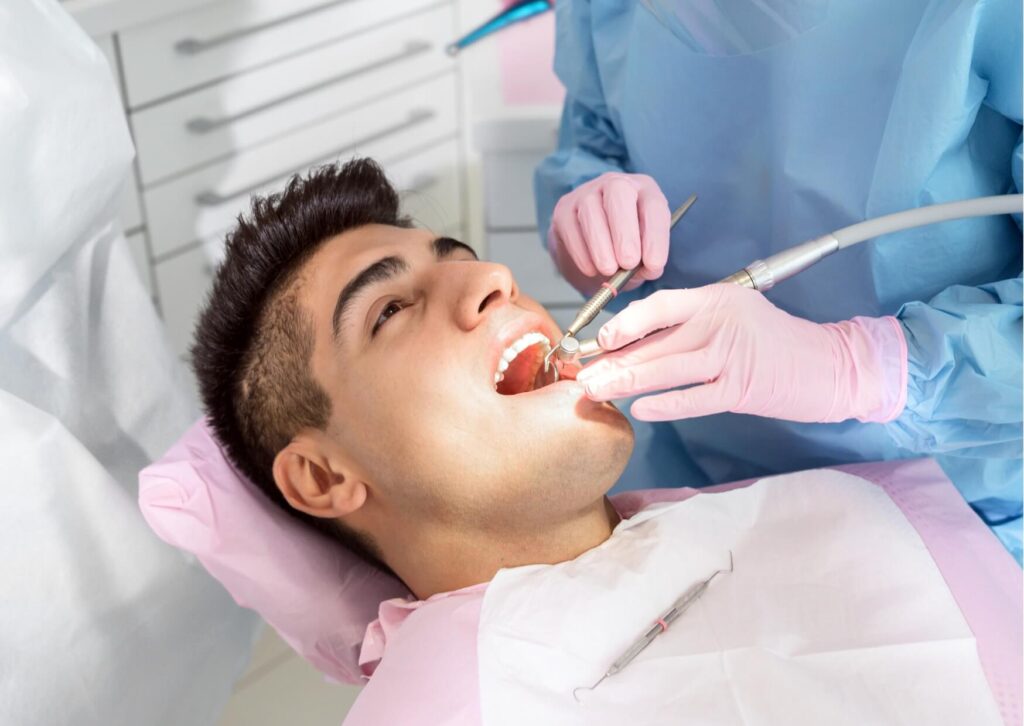
Treatment depends on where the infection is, how severe it is, and whether the tooth can be saved. The goal is to remove the source of the infection, not just reduce symptoms.
An infected tooth needs prompt evaluation. After diagnosis, the dentist can explain the findings and discuss appropriate care. Restorative care may help address damaged tooth structure when clinically appropriate.
If the tooth cannot be restored safely, extraction may be the better option. That may involve oral surgery or later replacement with ceramic implants.
Some patients also want to understand implant cost before deciding. See our guide to implant cost. At Synergy Dental Center, many patients prefer metal-free dentistry when replacement is planned.
Some infections also need drainage by a dental professional. Supportive medications, including antibiotics, may be used in some situations, but they do not replace treatment of the source.
A dark tooth does not always mean infection, and a painful tooth is not always infected. At the same time, a tooth can be infected without dramatic pain, especially if the nerve is no longer responding normally.
Do not try to drain swelling yourself or treat a suspected abscess with home remedies from the internet. That can injure tissue, delay proper care, and make the real problem harder to treat.
If a tooth looks abnormal and symptoms are persistent, worsening, or severe, arrange a dental evaluation. Photos may help you track changes, but they are not a substitute for an exam.
Timely care matters. It is much easier to treat a dental infection early than to wait until swelling forces an emergency.
Synergy Dental Center offers biologic exams in Gillette, WY to evaluate suspected infections; we also serve patients from nearby Rapid City and Spearfish. Call (307) 682-3100 to schedule.
Yes. Some infected teeth show little visible change early on. Pain with biting, temperature sensitivity, or a bad taste may appear before obvious swelling does.
Not always, but it can be a strong sign of a draining dental abscess. A dentist should evaluate a persistent or recurrent bump on the gum.
No. Some infections cause intense throbbing pain, while others cause pressure, tenderness, or only intermittent discomfort. In some cases, the pain decreases when drainage starts.
Seek urgent care if there is facial swelling that is getting worse, fever, trouble swallowing, trouble breathing, or swelling near the eye. These symptoms may signal a spreading infection.
A tooth infection may temporarily feel better, but the source usually does not resolve without dental treatment. If you suspect an infection, a dental exam is the safest next step.
Ozempic does not appear to directly damage teeth or weaken enamel as a drug effect on the tooth itself. The…
If you are comparing veneers cost by location, you will quickly see that pricing can vary a lot. Veneers are…
An impacted wisdom tooth is a third molar that cannot fully come in the normal position. It may stay trapped…